Shandong Gold Lead Machinery Co., Ltd.

Understanding Pulling Force in Pultrusion Machines
Pulling force is an important pultrusion specification, but it cannot be evaluated in isolation. Buyers need to understand what the quoted figure describes and how traction will be applied to the intended profile under defined process conditions.
Clarify the meaning of the rating
Ask whether the figure refers to a rated capacity, a measured condition or another defined limit. Request the relevant operating assumptions and how the force is monitored or controlled. A high nominal rating does not establish that the line can produce a particular profile at an acceptable quality level. Tooling resistance, material behaviour and the traction arrangement also matter.
Connect traction with profile protection
Review how contact surfaces or clamps transfer force without unacceptable slip or damage. Hollow and thin sections may require particular attention to contact geometry. Discuss the relationship between the puller, line alignment and downstream support. Where a performance commitment is part of the purchase, define the representative material, tooling, profile and test procedure in writing.
A practical decision example
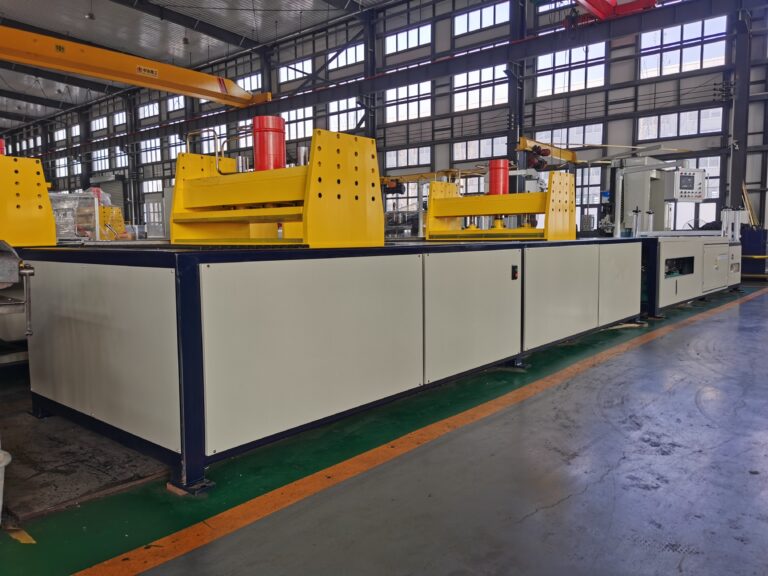
Two pullers can quote similar force ratings but use different contact arrangements. For a thin-walled section, review how each transfers that force and protects the product. A representative trial should assess dimensions and surface condition, not simply whether the machine can pull the material.
Key checks
- Define the quoted force and its conditions
- Review contact geometry and profile limits
- Tie performance acceptance to a representative trial
Next step
Use pulling force as one input to a complete process review. This leads to a more useful machine comparison than choosing the largest number on a specification sheet.
Review the pultrusion equipment range and share your product specification for a configuration and scope discussion.